


Swan Canada installation guide
Acoustic Wall Panels
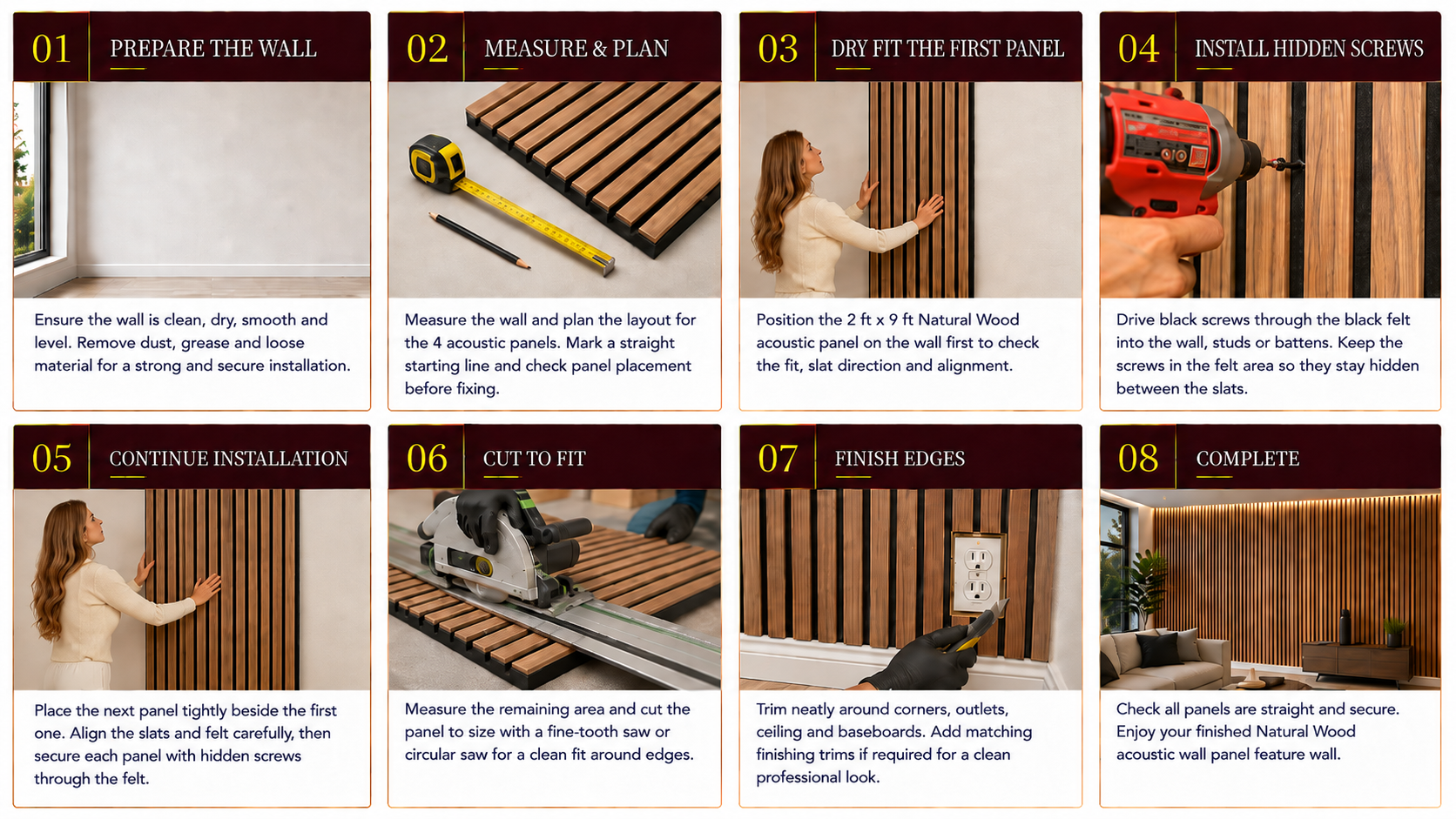
Acoustic slat panels can typically be fastened through the felt backing into suitable supports. Plan visible slat spacing, panel seams and electrical openings before installation.
Tools & materials
Tape measure and level
Stud detector
Fine-tooth circular or track saw
Sharp knife for felt
Black screws or approved adhesive
Drill, driver and PPE
Before you begin
Acclimate the panels indoors and verify the supporting wall or battens are straight. For enhanced acoustic performance, follow the selected batten and insulation assembly design.
Follow these installation steps
Watch the installation process
Common questions about Acoustic Wall Panels
How are acoustic wall panels fastened?
They can often be fixed through the felt into studs, furring or suitable anchors, with compatible adhesive added where approved. The fastening method must support the panel and maintain the intended air gap or backing.
What is the cleanest way to cut the slats and felt?
Use a fine-tooth saw for the slats and a sharp knife for the felt. Support the panel, tape the cut line if helpful and test on an offcut to protect the veneer or finish.
How do I keep the slat spacing consistent at seams?
Dry-fit adjacent panels, measure the repeating gap and trim only where necessary. Use a spacer or offcut as a jig and check alignment from a distance before fastening.
How should outlets be handled?
Turn off and verify the circuit, remove only the material needed for the box and keep the felt and slat edges neat. Electrical extensions or box changes should be completed by a qualified electrician.
Will mounting directly to drywall improve acoustics?
It can reduce reflections, but performance depends on the room and assembly. An approved air gap or acoustic insulation behind the panels may improve absorption when installed correctly.
Can acoustic panels cover an entire wall?
Yes, when the substrate and fastening plan are suitable. Plan panel direction, edge details, outlets and the final cut before installation so the pattern remains consistent.
Can the panels be used in humid rooms?
Use them only within the product’s humidity rating. Wood veneer, MDF slats and felt can be affected by moisture, so control condensation and avoid direct water exposure.
Can acoustic panels be installed on a ceiling?
Ceiling installation needs secure mechanical fastening into suitable structure and may require a professional. Adhesive alone should not be relied upon unless the complete system is expressly approved for overhead use.


