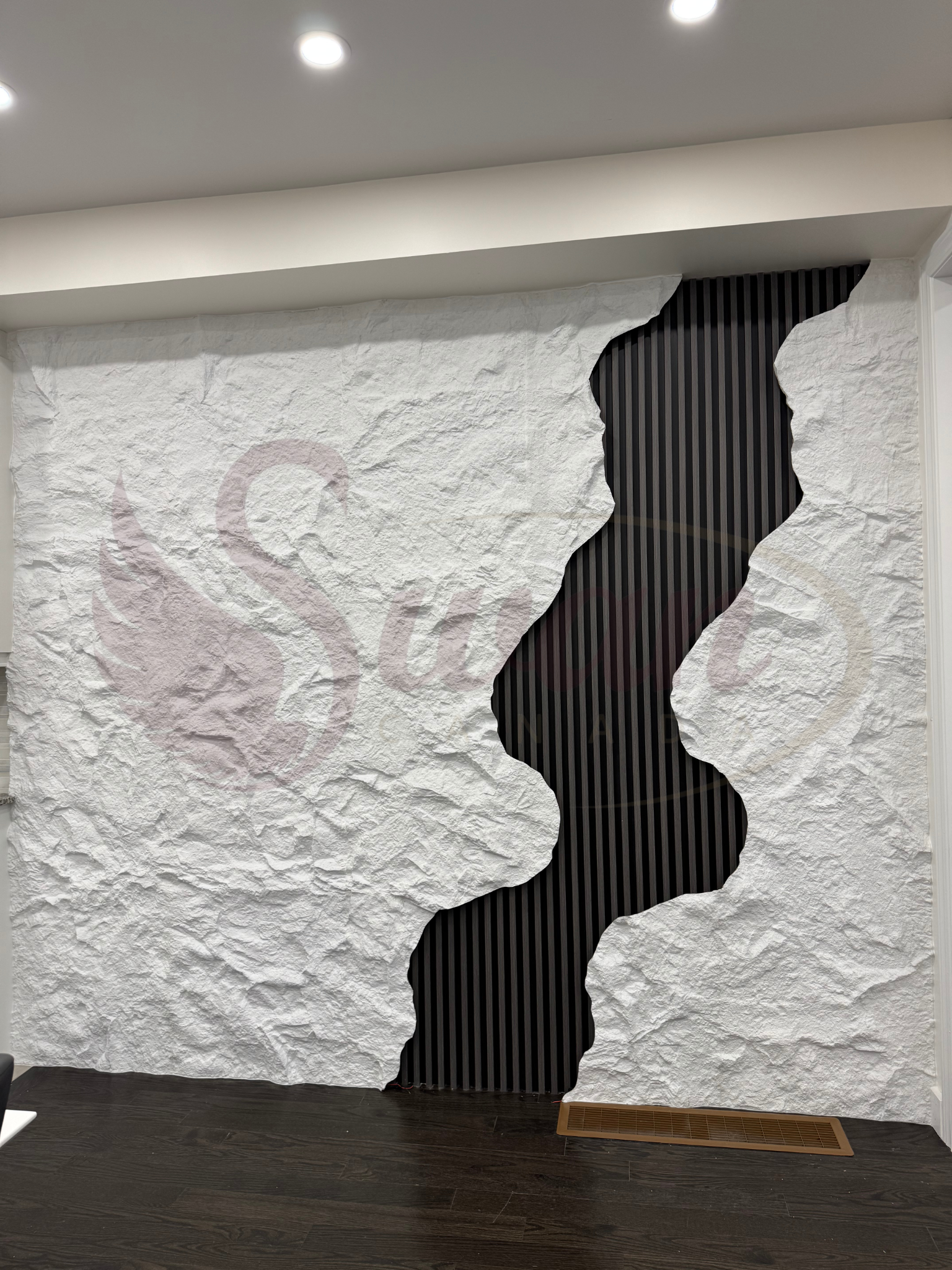
Swan Canada installation guide
Faux Stone
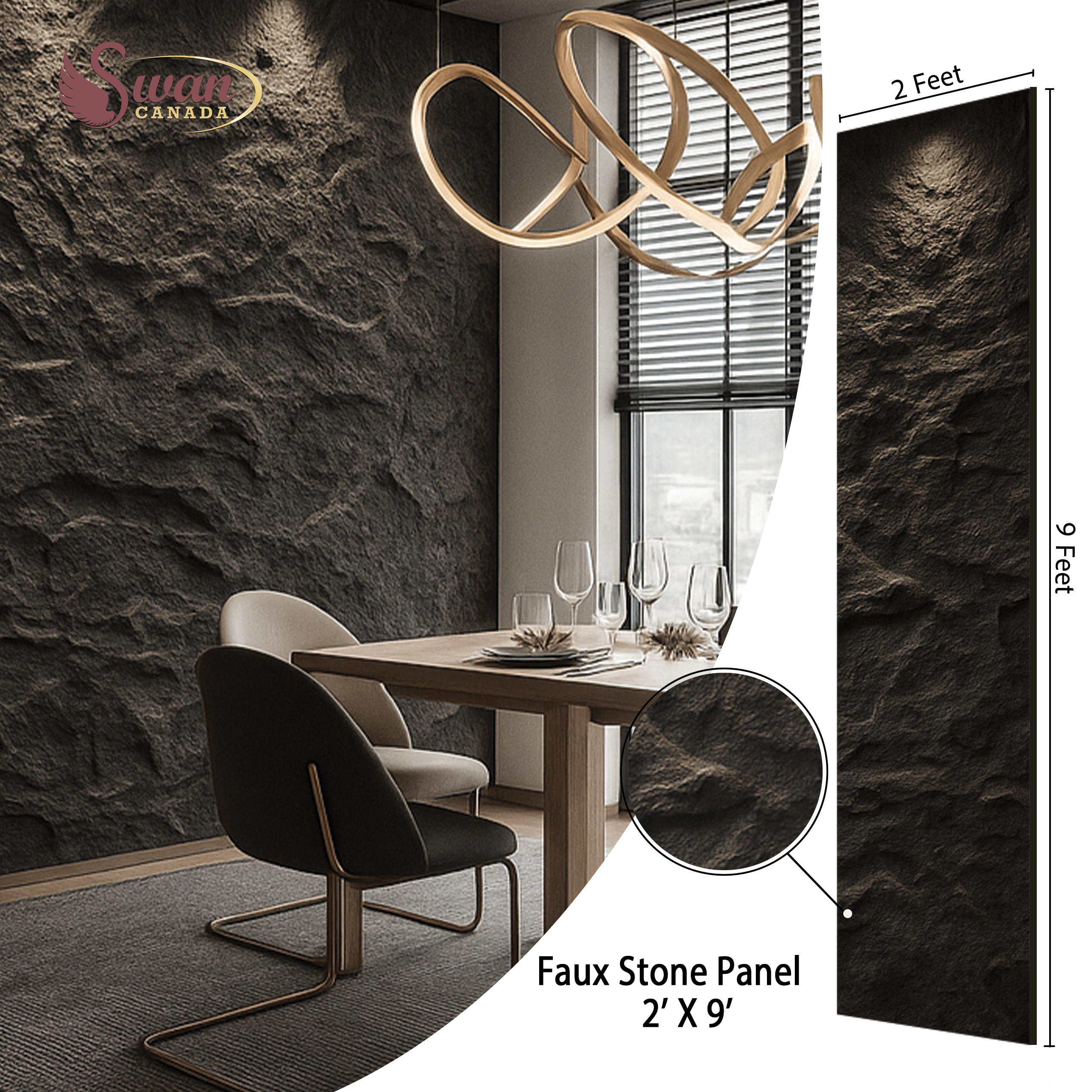
Faux stone panels look most natural when joints are planned and staggered. Choose fastening methods suitable for panel weight, wall substrate and the installation environment.
Tools & materials
Tape measure, level and chalk line
Appropriate saw and blades
Compatible adhesive
Mechanical fasteners where specified
Construction screws and driver
PPE and colour-matched touch-up materials
Before you begin
Confirm the substrate is secure and dry. Around heat sources or fireplaces, follow all appliance clearances and non-combustible-material requirements; obtain professional advice.
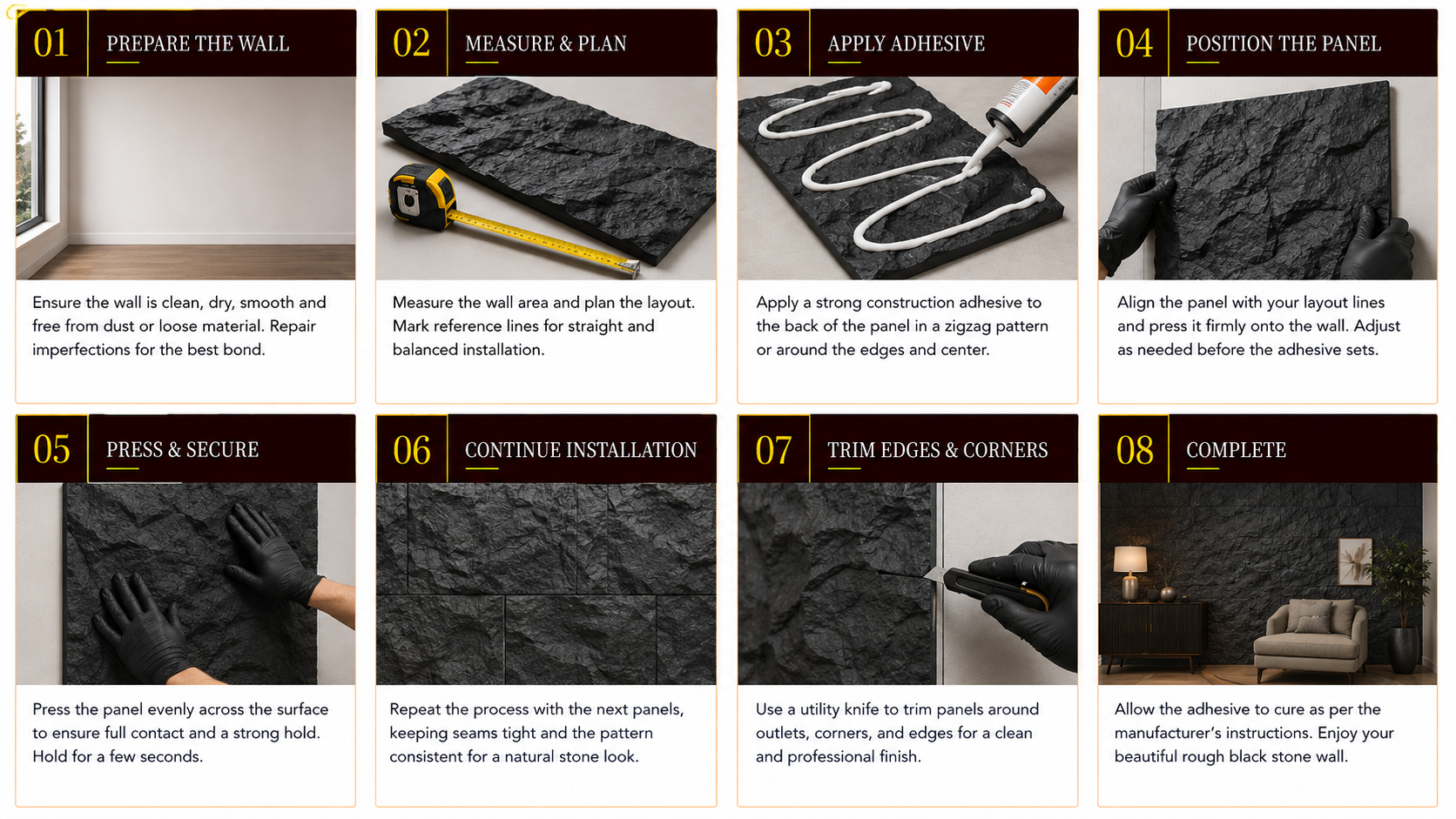
Follow these installation steps
Common questions about Faux Stone
Can faux stone panels be used indoors and outdoors?
Suitability depends on the exact product. Confirm its exterior, UV, temperature and moisture rating before use and follow the required weather-resistant assembly for outdoor installations.
How should the wall be prepared?
The substrate must be sound, clean and able to support the panel system. Correct moisture problems, remove loose material and install approved sheathing or a subframe where required.
Should I use adhesive, fasteners or both?
Use the fastening method specified for the panel and location. Exterior, overhead and high-traffic installations commonly need mechanical fastening in addition to compatible adhesive.
What is the best way to cut faux stone?
Use a sharp fine-tooth saw or the tool recommended for the panel material. Support the panel, protect the textured face and test the cut and colour touch-up on an offcut.
How can I hide repeating seams?
Stagger joints, rotate or mix panels where the pattern allows, and dry-layout the wall before fixing. Use matching corner pieces, texture or approved touch-up materials to blend visible joints.
How are outside corners finished?
Use matching corner panels or an approved mitred or trimmed detail. Plan corners before flat panels so joint locations and pattern direction look natural.
Can faux stone be installed around a fireplace?
Only when the panel, adhesive and substrate meet the fireplace clearance and temperature requirements. Non-combustible rules and appliance instructions take priority over decorative appearance.
Does an exterior installation need sealing or drainage?
Exterior walls need the drainage, flashing, movement gaps and sealant details specified for the complete system. Decorative panels alone are not a weather barrier.